
Unlocking the Secrets of Ancient Egyptian Pyramids: Facts, Mysteries, and Timeless Wonders
What is it about the Egyptian pyramids that continue to captivate our imaginations, centuries after they were built? Whether it’s the incredible architectural precision, the mystery of how they were built without modern tools, or the ancient secrets buried within, pyramids remain one of history’s greatest marvels. In this deep dive, we’ll journey through the hidden chambers, ancient blueprints, and cultural meanings of the Egyptian pyramids. From fun pyramid facts for kids to scientific pyramid mysteries solved, this article uncovers it all.
And if you’re planning your next great adventure to witness these ancient wonders firsthand, make sure to check out the best travel deals on Airline Top Deals.
A Journey Through Time: The Egypt Pyramid Timeline
The Oldest Pyramids in Egypt
The story of Egyptian pyramids begins long before the Giza Plateau became world-famous. The oldest pyramid is the Pyramid of Djoser, built around 2630 BCE during Egypt’s Third Dynasty. Designed by the legendary architect Imhotep, this step pyramid marked a dramatic shift from traditional mastaba tombs. Made of limestone blocks and towering at 204 feet, Djoser’s pyramid introduced a bold, vertical form that would define Egyptian royal burials for centuries.
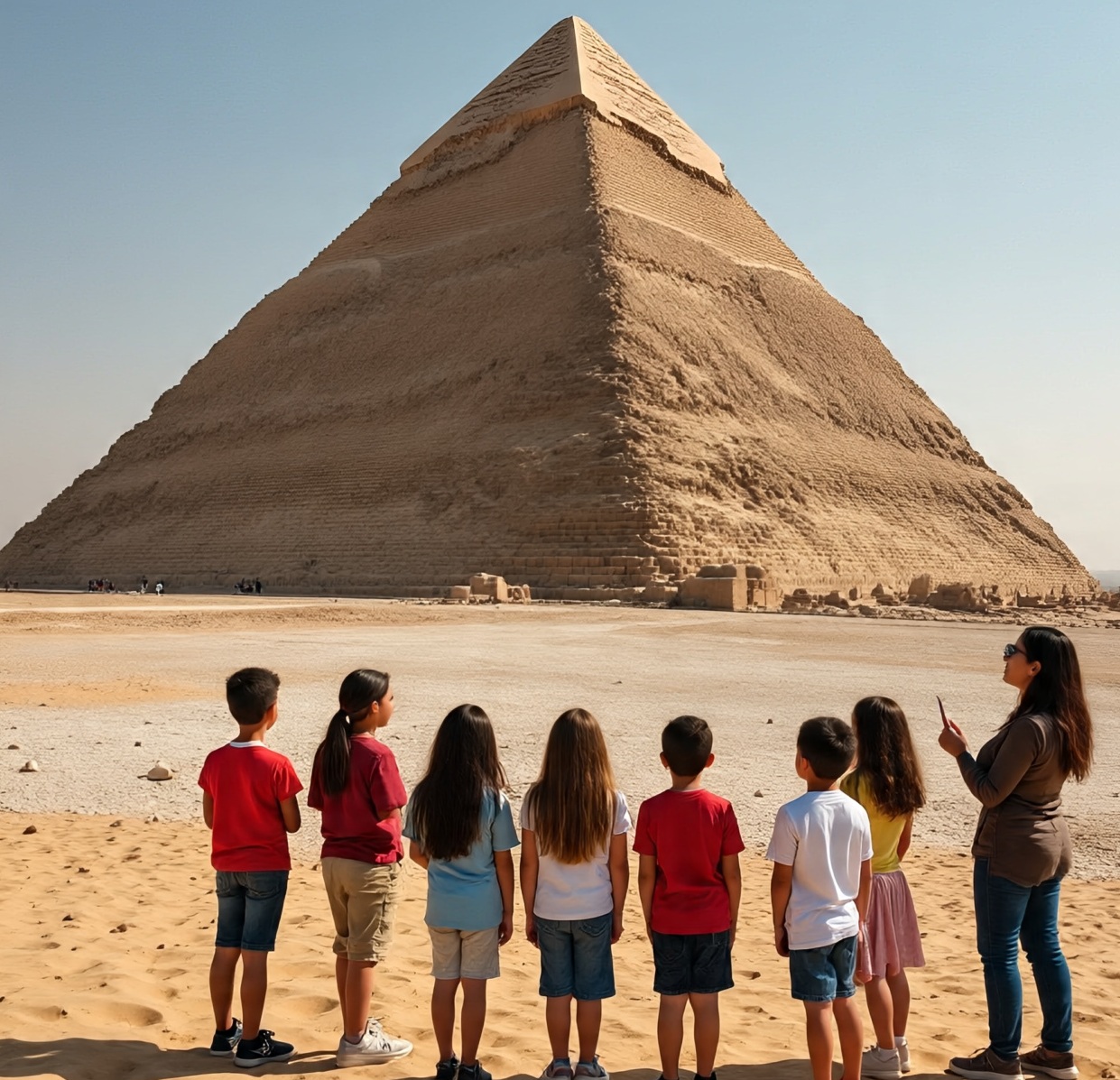
These early pyramids were not as geometrically perfect as the later ones but were deeply significant. They reflected a shift in Egyptian ideology—from mere tombs to divine stairways guiding pharaohs to the afterlife. Some of the lesser-known, unknown pyramid history lies in the rural deserts of Saqqara and Dahshur, where smaller, forgotten pyramids slowly erode under the desert sun.
Major Milestones in Pyramid Evolution
The pyramid timeline spans over a millennium of construction innovation. After Djoser’s step pyramid, the Sneferu dynasty ushered in new advances. Sneferu built the Bent Pyramid and then perfected his technique with the Red Pyramid, Egypt’s first smooth-sided structure.
The Giza pyramids, built during the Fourth Dynasty (c. 2570 BCE), marked the pinnacle of this architectural journey. The Great Pyramid of Giza, built for Pharaoh Khufu, remained the tallest man-made structure for over 3,800 years.
Following Giza, pyramid construction continued but declined in quality and scale due to political and economic shifts. The last royal pyramid, built for Pharaoh Ahmose around 1550 BCE, was a humble structure compared to its predecessors.
Explore more ancient landmarks in our guide to 101 Must-See Attractions.
The Engineering Marvels of Pyramid Construction
How Pyramids Were Built: Ancient Engineering Feats
Let’s address one of history’s biggest questions: How were the pyramids built? Theories abound, from alien assistance (fun but unlikely) to ingenious engineering solutions involving manpower, ramps, and sledges. What’s agreed upon is that building these enormous stone structures took brilliant planning, resources, and labor.
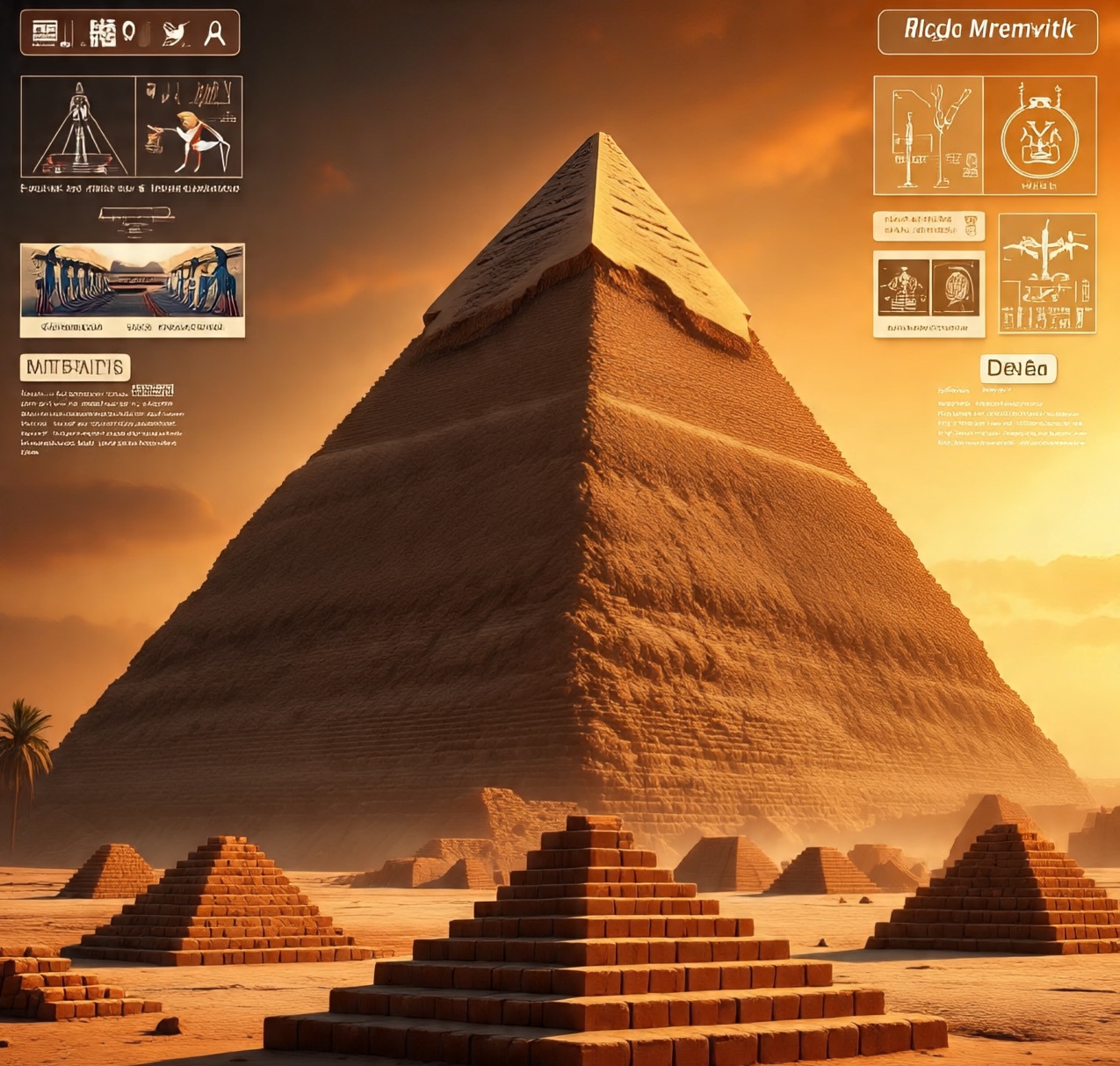
The Great Pyramid of Giza is composed of more than 2.3 million limestone blocks, each weighing between 2 to 30 tons. It’s believed that these blocks were transported using a combination of sleds and lubricated sand to reduce friction. Recent discoveries even suggest wooden sledges and water techniques were employed, showcasing just how advanced ancient Egyptian engineers truly were.
A workforce of skilled laborers, not slaves as previously believed, toiled for decades in meticulously organized crews. These laborers lived in nearby villages, and archaeological evidence, including beer jars and bread ovens, supports the idea of a well-fed, respected workforce.
Pyramid Construction Materials and Techniques
The primary materials used were limestone, granite, and basalt. Local limestone was used for the pyramid cores, while high-quality white Tura limestone sheathed the exterior, giving the pyramids a brilliant reflective surface. Granite, sourced from Aswan, was used for internal chambers and sarcophagi due to its strength.
Construction techniques included the use of leveling tools, primitive cranes, and ramps. Some Egyptologists believe that spiral or zig-zagging ramps were used to raise the stones to higher levels. Others argue for a straight, massive ramp approach. Either way, the engineering skill required was phenomenal.
For a modern analogy, imagine trying to build a skyscraper with no cranes, no blueprints, and no computers—just brainpower, manpower, and raw materials. That’s what the ancient Egyptians did.
For exclusive flight offers to Egypt and other ancient destinations, check out Singapore Airlines Coupons.
The Real Purpose Behind the Pyramids
Why Pyramids Were Built: Spiritual and Cultural Meaning
The pyramids weren’t just tombs—they were religious monuments embodying the very essence of Egyptian beliefs. Ancient Egyptians believed in the ka, a spiritual double that lives on after death. To ensure the ka’s safe journey, they built elaborate tombs filled with goods, statues, and prayers.
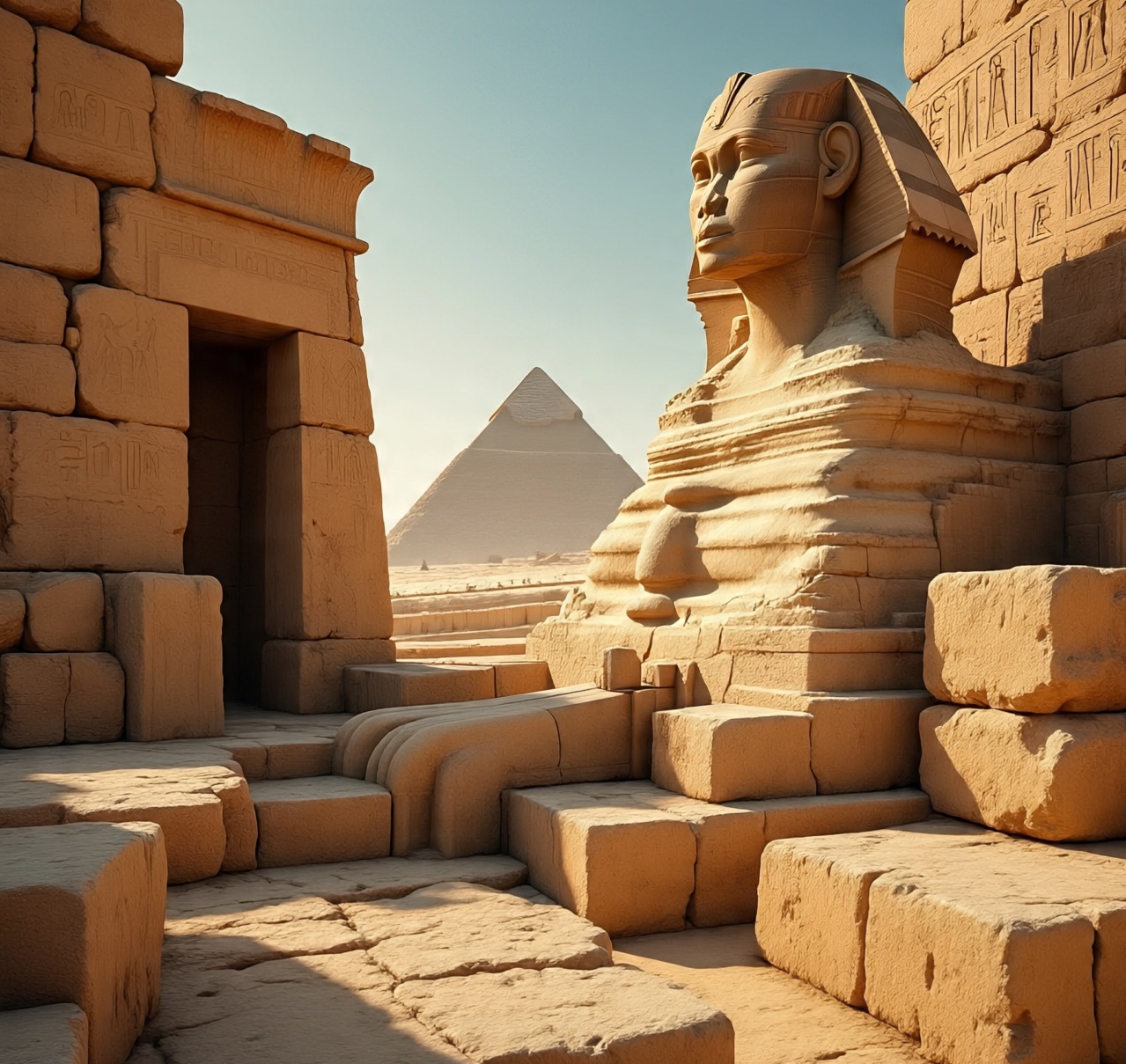
The pyramid’s shape was symbolic. Its four triangular sides represent the sun’s rays, allowing the pharaoh’s soul to ascend to heaven. This is deeply rooted in the cult of Ra, the sun god. Thus, pyramids became both resting places and resurrection machines.
Pyramids also served as a political statement. By constructing these colossal structures, pharaohs demonstrated their divine power and authority. It was their ultimate PR move—an eternal monument to their rule and religious devotion.
Scientific Theories and the Pyramid Mystery Solved
Over the years, many scientific theories have emerged to explain the real pyramid purpose and construction logistics. Some believe they served as astronomical observatories, aligning perfectly with the Orion Belt or cardinal points. Others suggest they encoded mathematical constants like pi and the golden ratio, proving that ancient Egyptians had a deep understanding of geometry and astronomy.
Recently, muon radiography (a form of particle scanning) has helped scientists discover hidden voids inside the pyramids—adding fuel to the mystery and excitement. These secrets continue to unfold, turning each discovery into a step closer to solving the ancient puzzle.
Want to stand where these mysteries were born? Book your adventure at Airline Top Deals.
Exploring the Inside: Egyptian Tomb Architecture
Inside Egyptian Pyramids: Hidden Chambers and Tunnels
The outside might be impressive, but the real magic lies inside Egyptian pyramids. These inner sanctums are filled with winding tunnels, hidden chambers, and mysterious voids. In the Great Pyramid, for example, there are three main chambers: the King’s Chamber, the Queen’s Chamber, and an unfinished subterranean chamber.
Each was precisely aligned and placed, often housing the pharaoh’s sarcophagus at the center of a spiritual axis. These chambers were designed to protect the deceased and guide their soul through the Duat—the Egyptian underworld.
New technologies like thermal scanning and cosmic ray imaging have recently uncovered previously unknown voids inside the pyramids, hinting at more rooms or even hidden treasures yet to be found.
Pharaoh Tomb Secrets and Ritual Designs
Pharaoh tombs were far from empty stone rooms. They were elaborately decorated with hieroglyphics, spells, and symbols from the Book of the Dead, guiding the pharaoh through the afterlife. Walls were often painted with vibrant scenes of gods, offerings, and celestial journeys.
They were also filled with jewelry, amulets, food, statues, and even mummified pets—all intended to serve the king in the next world. These rituals weren’t just about honoring the dead but about securing cosmic balance.
Such treasures reveal the richness of Egyptian culture pyramids were built to preserve. They were time capsules of faith, artistry, and royal power.
Giza Pyramid Facts and Amazing Structures
Great Pyramid Height Facts and Structural Wonders
The Great Pyramid of Giza isn’t just the most famous pyramid—it’s a true architectural marvel. Built for Pharaoh Khufu around 2560 BCE, this incredible structure originally stood at 146.6 meters (481 feet), though erosion and the loss of its outer casing stones have reduced it to about 138.8 meters (455 feet) today. It held the title of tallest man-made structure in the world for over 3,800 years—an impressive feat by any standard.
One of the most mind-boggling aspects is its precision. The pyramid is aligned with true north with less than 1/15th of a degree of error, a level of accuracy that still stumps modern engineers. Each side of the base measures roughly 230.4 meters (755.9 feet), and the corners align almost perfectly with the cardinal points—north, south, east, and west.
The structure’s volume is estimated at 2.6 million cubic meters, and the total weight comes in at around 6 million tons. How the ancient Egyptians achieved such scale and precision remains one of the great engineering mysteries of all time.
Not to mention, the pyramid contains internal shafts and chambers aligned with astronomical bodies, supporting theories that it was more than a tomb—it might have also functioned as a celestial observatory or a spiritual gateway.
It’s one of the key highlights in our 101 Must-See Attractions guide, and for good reason. A structure this awe-inspiring deserves a place on every bucket list.
Fascinating Facts About the Sphinx and Pyramids
You can’t talk about the Giza Plateau without mentioning the Great Sphinx, the enigmatic guardian of Khafre’s pyramid. With a lion’s body and a human head, the Sphinx stretches 73 meters long and 20 meters high, making it one of the largest and oldest monolithic statues in the world.
But did you know that no one knows exactly when the Sphinx was built or who it really represents? Most scholars agree it was built during Pharaoh Khafre’s reign (around 2500 BCE), but its weathered condition has led some to believe it’s even older—a debate that adds another layer to the unknown pyramid history.
The Sphinx also aligns with the summer solstice, suggesting that it served a solar and religious purpose, possibly as a celestial marker or a divine protector. Its missing nose, which has inspired numerous myths, likely disappeared due to deliberate vandalism centuries ago—not cannon fire as some legends claim.
Together, the pyramids and the Sphinx form one of the most iconic landscapes in human history. From engineering feats to mystical symbolism, they’re a treasure trove of interesting pyramid trivia and a cornerstone of Egyptian culture.
For more travel tips and unbeatable deals to Egypt and other ancient wonders, visit Airline Top Deals.
Read More :
- Unlocking the Secrets of Ancient Egyptian Pyramids: Facts, Mysteries, and Timeless Wonders
- Why Is the Taj Mahal a Popular Tourist Attraction?
- Why Machu Picchu in Peru Deserves Its Spot Among the 7 Wonders of the World
- 10 interesting things you didn’t know about the Great Wall of China
- Majestic Camelback Mountain on Phoenix Tour
- The Great Wall of China on China Tour