
The Acropolis of Athens: Complete Travel Guide, History, Tickets, and Visitor Tips
Why the Acropolis of Athens Is One of the World’s Greatest Landmarks
Why Ancient Greeks Built the Acropolis
The Acropolis of Athens stands like a timeless crown above the city, watching over Greece for thousands of years. Whether you are passionate about ancient history, fascinated by Greek mythology, or simply planning your dream European vacation, the Acropolis delivers an experience that feels almost surreal. The moment travelers climb the ancient stone pathways and catch sight of the mighty Parthenon glowing under the Mediterranean sun, they quickly understand why millions of visitors consider it one of the greatest landmarks on Earth.
Athens itself is a beautiful collision between ancient civilization and modern energy. Busy cafés, colorful neighborhoods, rooftop restaurants, and bustling markets surround this archaeological masterpiece. Yet the Acropolis remains the soul of the city. It represents democracy, philosophy, architecture, and artistic brilliance all rolled into one breathtaking location. Travelers often spend years seeing photographs online, but standing there in person creates an entirely different feeling. It is like stepping directly into a history book where every stone tells a story.
Planning a trip to Greece can sometimes feel overwhelming because there are countless airlines, hotel options, and travel deals available online. Finding affordable flights and vacation packages becomes much easier when using trusted travel resources like Airline Top Deals. Travelers searching for premium airline offers can also explore special promotions from Qatar Airways and Emirates Airlines for comfortable international travel options to Athens.
This complete guide covers everything you need to know, including the history of the Acropolis, ticket prices, travel tips, photography spots, hidden gems nearby, and the best time to visit the Acropolis of Athens.
Why the Acropolis of Athens Is One of the World’s Greatest Landmarks
The Acropolis is not just another ancient ruin. It is one of the most important symbols of human civilization. Perched high above Athens on a rocky hill, this UNESCO World Heritage Site has stood for over 2,500 years. Throughout history, it survived wars, invasions, earthquakes, and even explosions. Despite centuries of destruction and restoration, it still remains incredibly powerful and majestic.
What makes the Acropolis unique is its deep connection to the birth of democracy and Western civilization. Ancient Athens was once the intellectual center of the world. Philosophers like Socrates and Plato walked these streets while architects and artists created structures that still inspire modern buildings today. The Acropolis became a sacred center dedicated primarily to the goddess Athena, who was believed to protect the city.
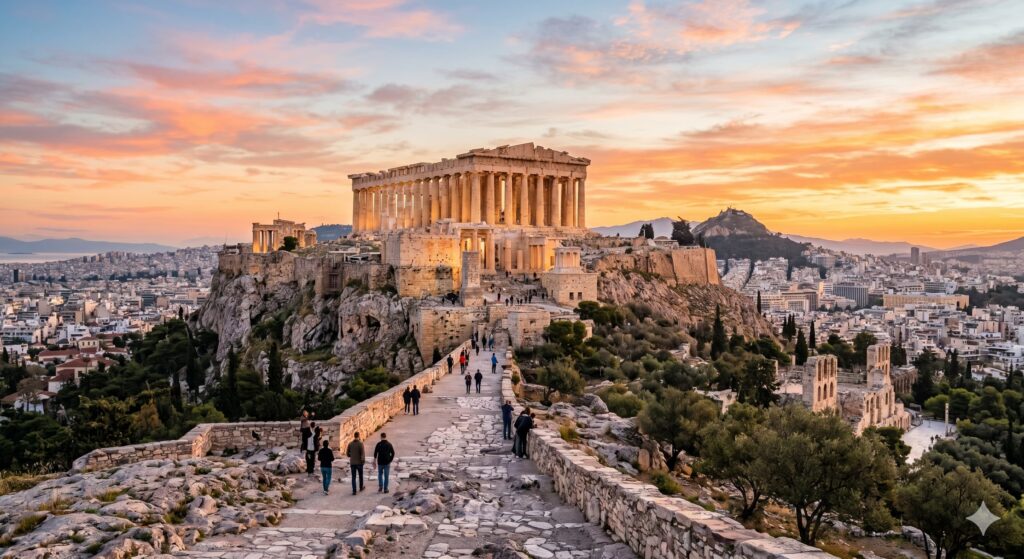
Travelers are often surprised by how emotional the experience feels. You are not simply visiting a tourist attraction; you are standing where ancient citizens debated ideas that shaped the modern world. The giant marble columns of the Parthenon seem almost impossible to build without modern technology, yet ancient Greek architects achieved incredible precision thousands of years ago.
The panoramic views from the Acropolis are equally unforgettable. From the top, visitors can admire the sprawling city of Athens, nearby hills, ancient ruins, and the sparkling Greek sky stretching endlessly across the horizon. Sunset visits are especially magical because the golden light transforms the marble structures into glowing masterpieces.
For travelers planning a European adventure, Athens offers a perfect combination of history, food, culture, and affordability. Booking smart airline deals through platforms like Airline Top Deals can help travelers save money while enjoying premium international flights.
What Is the Acropolis of Athens?
The Meaning Behind the Word “Acropolis”
Many travelers ask, “What is the Acropolis of Athens?” The word “Acropolis” comes from the Greek words “akron” meaning highest point and “polis” meaning city. Essentially, an acropolis was a fortified hilltop found in many ancient Greek cities. However, the Acropolis of Athens became the most famous of them all.
This sacred hill served as the religious and cultural heart of Athens. The most iconic building on the site is the Parthenon, a temple dedicated to Athena, the city’s patron goddess. Other important structures include the Erechtheion, the Temple of Athena Nike, and the Propylaea entrance gate.
Walking through the Acropolis feels like entering an open-air museum frozen in time. Every pathway reveals layers of history. Broken columns, ancient carvings, and weathered marble surfaces tell stories from centuries ago. Archaeologists continue studying the site today because new discoveries constantly emerge beneath the ground.
One fascinating aspect of the Acropolis is how advanced ancient Greek engineering truly was. Architects designed buildings with subtle curves and optical illusions to make them appear perfectly symmetrical to the human eye. These techniques continue influencing modern architecture worldwide.
The Acropolis was not just a place for worship. It represented power, pride, and identity for Athenians. Citizens viewed it as the symbol of their achievements in art, philosophy, military strength, and politics. Even today, Greece proudly uses the Acropolis as one of its strongest national symbols.
Tourists visiting Athens often combine their historical exploration with luxury travel experiences. Premium airline services from carriers like Qatar Airways and Emirates Airlines make long-haul journeys to Greece far more comfortable, especially for international travelers coming from North America, Asia, or the Middle East.
History of the Acropolis of Athens
The Golden Age of Ancient Athens
The history of the Acropolis stretches back thousands of years, long before the famous Parthenon existed. Archaeological evidence suggests that humans occupied the hill as early as the Neolithic period. Over time, it evolved into a fortified stronghold and religious center.
The Acropolis reached its golden age during the 5th century BCE under the leadership of Pericles. After Persian invaders destroyed earlier temples, Athens launched an ambitious rebuilding project. Skilled sculptors, architects, and craftsmen transformed the hill into an architectural masterpiece unlike anything the ancient world had seen before.
The Parthenon became the centerpiece of this transformation. Built between 447 and 432 BCE, the temple showcased extraordinary craftsmanship and artistic brilliance. Massive marble blocks were transported from nearby mountains and assembled with astonishing precision. Inside stood a gigantic statue of Athena covered in gold and ivory.
The Acropolis experienced dramatic changes throughout history. It served as a church during the Byzantine period and later became a mosque under Ottoman rule. In 1687, tragedy struck when an explosion severely damaged the Parthenon during a Venetian attack. Parts of the structure collapsed, leaving behind the ruins visitors see today.
Despite centuries of destruction, restoration projects continue preserving this historical treasure. Modern engineers carefully stabilize damaged structures while protecting their original beauty. Visiting the Acropolis today allows travelers to witness both ancient greatness and ongoing preservation efforts.
History lovers often describe the Acropolis as one of the few places where the ancient world still feels alive. Every staircase and marble pathway carries echoes of philosophers, warriors, artists, and rulers who once shaped civilization itself.
Best Time to Visit the Acropolis of Athens
One of the most searched travel questions is: “What is the best time to visit the Acropolis of Athens?” Timing can dramatically affect your experience because Athens attracts millions of tourists every year.
The best months to visit are usually April, May, September, and October. During these periods, temperatures remain comfortable, and crowds are smaller compared to peak summer season. Spring is especially beautiful because wildflowers bloom around ancient ruins, adding color to the landscape.
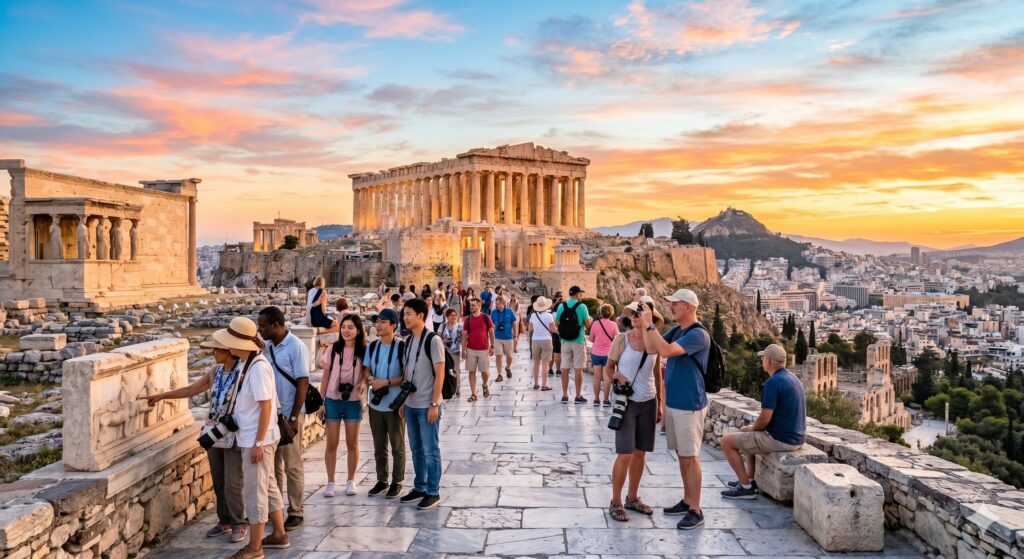
Summer visits between June and August can become extremely hot. Temperatures often exceed 95°F (35°C), and climbing uphill under direct sunlight can feel exhausting. Early morning visits are strongly recommended during summer months. Arriving right when the gates open helps travelers avoid both crowds and intense heat.
Winter offers a surprisingly peaceful experience. While temperatures are cooler, fewer tourists mean shorter lines and quieter exploration. Photographers particularly enjoy winter lighting because it creates softer shadows across the marble structures.
Sunset visits provide another unforgettable experience. Watching the golden sunlight illuminate the Parthenon creates incredible photo opportunities. The glowing marble against the orange sky almost feels cinematic.
Travel planning becomes easier when flights and accommodations are booked in advance. Travelers searching for affordable airfare to Greece can compare airline promotions using Airline Top Deals to find competitive rates from major international carriers.
 Yellowstone National Park Travel Packages (USA)